What reactive arousal actually means
Here's the thing: you're not broken, and you're not low-libido. You have reactive arousal, which means your body doesn't send "I want sex" signals floating around in your head. Instead, your arousal builds in response to touch. No touch, no arousal signal. Some touch, slow arousal climb. Good touch, strong response.
This is completely normal. Research suggests roughly 70% of people with vulvas experience primarily reactive arousal. Yet somehow it feels like everyone else is just... horny constantly, fantasizing in the shower, spontaneously ready. So you assume something's wrong with you.
It's not. It's just how your nervous system is wired.
Why this matters for toy selection
Most vibrators are designed assuming you're already partially turned on. They're intense right out of the gate. They expect you to bring some baseline arousal energy, then they amp it up from there. If you have reactive arousal, that doesn't work. You need a tool that builds with you gradually, that works with your body's natural response curve instead of demanding you show up halfway through the story.
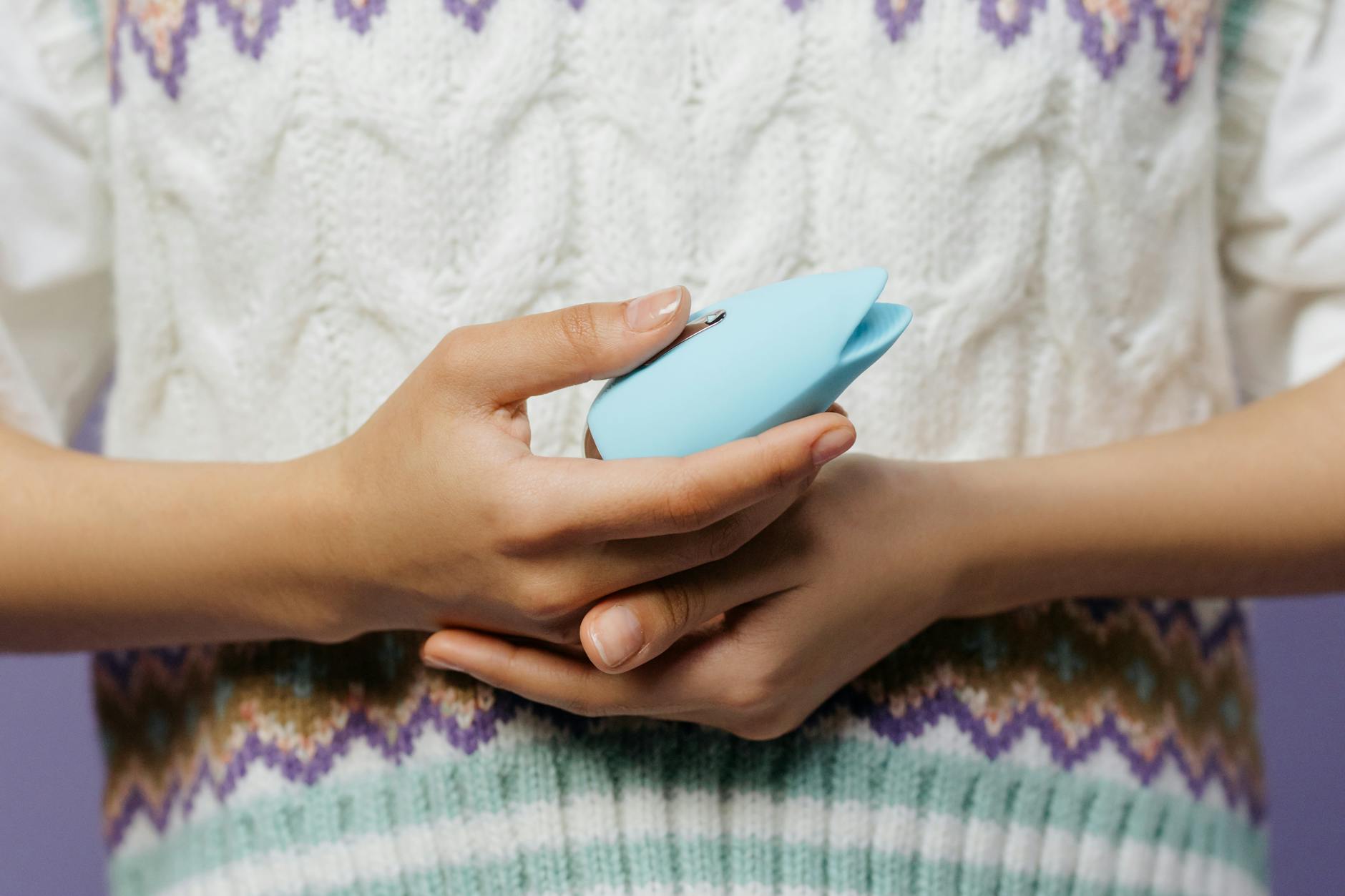
The Lem by The Lemon Clit Vibrator is different. The suction design activates arousal rather than assuming it's already there. You can start at a low pattern, feel your body respond to gentle pressure, and let that response build momentum. Each setting is a conversation, not a demand.
Pattern 1 is your actual starting point
Don't skip it. I know the impulse: you look at the patterns on a lemon vibrator and think "surely I need to get to pattern 3 or 4 to feel anything." Nope. Pattern 1 exists for people like you. It's a soft, rhythmic suction that wakes up nerve endings without overwhelming them.
Start there. Spend 5 to 10 minutes just getting to know what it feels like. Your job isn't to get aroused yet. Your job is to let your body notice the sensation and start building its own response. This is reactive arousal working exactly as designed.
Many people find that after 10 minutes on pattern 1, they're genuinely ready to move to pattern 2 or 3. That's your arousal catching up. That's the signal that things are working.
The warm-up time is longer and that's the whole point
If you have reactive arousal, you likely need 15 to 25 minutes of direct stimulation before you reach orgasm. This isn't slow or broken. This is your body doing its job. The older narrative was "good sex is fast, spontaneous, and surprise orgasms are better." Honestly? That's marketing for people with spontaneous arousal patterns.
Your version is different. You have time to be present, to feel every stage of building pleasure, to recognize the exact moment your body shifts from "this feels nice" to "this is arousing" to "I'm going to come." That's actually a superpower if you let it be.
Invest in the time. Block out 30 minutes solo, or negotiate 30 minutes with a partner where the goal is your arousal and response, not a specific endpoint. Use a lemon clitoral vibrator on your timeline, not someone else's.
Solo exploration first (if you're partnered)
If you have a partner, the pressure to perform arousal gets intense. They're waiting for you to get turned on. They're wondering if they're doing something wrong. You're stressed because you're not responding fast enough. Welcome to a three-person conversation that should be two.
Fix this by using a lemon vibrator alone first. Spend 2 to 4 solo sessions understanding your own reactive arousal without an audience. Learn what pattern feels right at minute 5 versus minute 15. Notice when your body actually shifts into genuine desire, not just compliance. This is data you need to have, and you can only get it alone.
Then you can tell a partner, "Here's what I need. Here's what works. Here's how long this takes." You're informing, not apologizing.
When partnered, make arousal a shared project
Reactive arousal works better with a partner once you both understand the task. You're not trying to seduce them. They're not trying to turn you on faster. You're building arousal together, which is a different energy entirely.
This means foreplay isn't foreplay. It's the main event. Use the lemon vibrator while they touch you elsewhere. Or use it while they're inside you, so stimulation builds from multiple points. Or have them operate the pattern changes while you focus on feeling your body respond. Each option is collaborative in a way that standard partnered sex often isn't.
The point: reactive arousal in partnership works best when both people agree that getting you genuinely, fully aroused isn't a preliminary step. It's where pleasure lives.
The mental side matters as much as the physical
Reactive arousal sometimes comes bundled with performance anxiety. You're worried you're taking too long. You're stressed you'll "ruin" the mood by needing 20 minutes. You're self-conscious that your arousal looks different than you expected. All of that tension kills arousal, which creates a feedback loop: stressed about not being aroused, so you can't get aroused, so you get more stressed.
Using a lemon vibrator in that headspace means you're actually fighting your own nervous system while the toy is trying to help. So: quiet the mind first. That might mean solo sessions where there's zero pressure. It might mean telling a partner "I need you to not watch me come, just feel me come." It might mean redirecting thoughts when they show up mid-session.
Your reactive arousal isn't a problem to fix. It's a signal to honor. Let it be slow. Let it be a process. Let it build.
Position and angle adjustments
Reactive arousal sometimes means you need consistent, direct pressure in exactly the right spot. The Lem's design lets you position it however your body needs. Some people need dead-center suction. Others find that tilting slightly changes everything. Some need the toy angled upward toward the clitoral body, others horizontally.
Try moving the toy around during your first few sessions. Not frantically, but intentionally. Notice when your body says "yes, there." That spot is your reactive arousal sweet spot. Once you find it, you can stay there and let the patterns do the work.
If you're using the lemon vibrator with a partner, show them where that spot is. "When I angle like this, that's the one" is useful data. It removes guesswork from both of you.
What to do about desire that never shows up
Honest moment: if you're using a lemon vibrator, starting at pattern 1, giving yourself 20 minutes, and your body still isn't responding, something else might be going on. That's not reactive arousal being stubborn. That's a signal to check in with what's happening above the neck.
Are you actually relaxed, or are you performing relaxation? Is there relationship tension you haven't addressed? Are you taking medication that genuinely suppresses arousal? Are you in a grief cycle, or dealing with unprocessed stuff? Are you just not interested in sex right now and that's actually fine?
Reactive arousal builds in response to touch, but it doesn't build in the presence of genuine distress or disconnection. If nothing's working, the answer might be to talk to a therapist or your doctor, not to try a different toy pattern. Your body's not being difficult. It's being honest.
The backup plan: partner touch first
If you're in a relationship and reactive arousal feels really stuck, try this: have your partner touch you for 10 minutes with zero vibration. Massage your vulva, your thighs, your stomach. Build arousal the slow, old-fashioned way. Then introduce the lemon vibrator when your body's already a little warm. You might find that reactive arousal responds better when there's human connection happening first.
This is collaborative foreplay that actually foreplay, because it's designed specifically for how your body works. No judgment that it takes time. No pressure that it "should" be faster. Just two people building arousal together.
Why lemon vibrators specifically work for reactive arousal
The suction technology doesn't demand arousal. It creates conditions for arousal. The rhythmic patterns are steady and buildable, which matches how reactive arousal actually climbs. You're not fighting a toy that's too intense or too random. You're using a tool designed for bodies that need time and consistency to respond.
Plus, there's a psychological shift when you're using something that's designed for you, not just a toy you're trying to make work. It changes the entire narrative from "why isn't my body normal" to "here's a tool built for how I actually work."
FAQ: Reactive arousal and lemon clitoral vibrators
How long does it actually take to reach orgasm with reactive arousal?
Typically 15 to 30 minutes of direct stimulation, sometimes longer. This varies widely. The first few times you use a lemon vibrator, you might take 25 minutes. After you know your body better, 15 minutes becomes typical. And that's absolutely normal. You're not slow. You have reactive arousal. Those are the same thing.
Can reactive arousal change over time?
Yes. It can shift with stress, relationship status, medication, hormones, or just time and practice. Some people find that after using a lemon vibrator consistently, they start noticing spontaneous arousal earlier. Others find reactive arousal is just their baseline and that's fine. Both are okay.
Is reactive arousal more common in women or people assigned female at birth?
It's more commonly reported by women and people with vulvas, but that might be partly because arousal patterns are discussed differently depending on your gender. Reactive arousal is neutral. It's not better or worse. It's just a thing that happens in a lot of bodies.
What if my partner doesn't have time for 20-minute arousal sessions?
Then you need a different partner conversation. Not because your body's wrong, but because your partner needs to understand that the time investment is non-negotiable for your pleasure. If they won't invest in your arousal, they're not investing in your satisfaction. That's a compatibility question, not an arousal question.
Does reactive arousal mean I don't have a real libido?
Absolutely not. Libido and arousal pattern are different things. You can have genuine desire for sex while also needing direct touch to access that desire. One doesn't cancel out the other. A lemon vibrator proves this: you use it, your body responds, you have orgasms. That's libido working exactly right.
Can medication affect reactive arousal?
Yes. Some antidepressants, anxiety meds, and blood pressure medications can suppress arousal. If you started a new medication and reactive arousal got worse, that's worth discussing with your doctor. There are often alternatives. But the issue is the medication, not your body.
What comes next
Reactive arousal isn't something to overcome. It's something to work with. A lemon vibrator gets that. It's built for bodies that respond to touch, not fantasy. That means you can stop trying to want sex before your body's ready, and start letting your body teach you when it actually is.
If you're partnered, show them this. If you're solo, give yourself permission to take the time you need. And if the reactive arousal cycle is wrapped up in shame or pressure, consider talking to a therapist who gets it. Your pleasure matters, and it matters on your timeline.
Ready to explore? Start with pattern 1. Stay there as long as it feels good. Let your body build its own arousal response. You've got time.