
Let's be real about new relationships and introversion
New relationships ask a lot of introverts. There's the small talk, the social energy output, the constant negotiation between what feels natural and what feels expected. And then there's sex, which somehow got lumped into the same category as casual conversation—as if desire is something you're supposed to spontaneously perform rather than something you build, communicate, and refine.
If you're introverted and newly partnered, pleasure can feel like another place where you're failing to meet an invisible standard. Your partner wants to connect. You want connection too, but you also want it on a schedule that doesn't require you to be "on" all the time. A lemon vibrator isn't a workaround. It's permission.
Why introversion changes the pleasure equation
Introversion doesn't mean you want less sex. It means the path to desire works differently for you. Extroverts often build arousal through external stimulation—conversation, novelty, the energy of another person's presence. Introverts typically need internal space first. We need to know what we're feeling before we can show it. We need processing time.
This isn't a flaw. It's a neurological difference that most dating culture completely ignores.
When you're new with someone, the social demand is intense. You're managing their expectations, calibrating your responses, reading their cues. By the time you're alone together, you might feel energetically depleted rather than aroused. That's not rejection. That's introversion operating exactly as designed. The problem isn't you. It's that partnered sex often demands real-time emotional performance, and introverts need a different framework.
Using a lemon vibrator as a communication tool
Here's what most people get wrong about sex toys in new relationships: they assume the vibrator is a substitute for what the partner should be doing. It's not. It's a translator.
When you use a lemon vibrator with a new partner, you're not replacing their touch. You're showing them what your body actually responds to. You're giving them data without requiring you to narrate it under pressure. Research in sex therapy shows that partners who explore vibrators together report higher satisfaction with communication overall, not just during sex.
For introverts specifically, this matters because you get to demonstrate without performing. You can show arousal through your body's response to a tool, which means you don't have to produce verbal enthusiasm you might not feel in the moment. Your pleasure becomes visible. Your partner sees it, gets curious about it, and learns from it. The vibrator does some of the communicating work for you.
This is especially powerful in early dating when you're still figuring out your dynamic. Instead of "I want you to touch me like this," you can say "Try this with me," and suddenly both of you are exploring together rather than one person directing and the other performing.
The rhythm that works for introverts
New relationships often operate on a frequency that exhausts introverts. There's pressure to want sex frequently, to always be ready, to show constant enthusiasm. This is partly about partners' insecurity and partly about cultural noise that treats sex as a performance metric.
If you're introverted, your sustainable rhythm is probably different. You might want partnered sex twice a week but solo pleasure three times a week. You might want scheduled intimacy because spontaneity requires you to shift emotional gears on someone else's timeline. You might want to masturbate first, reach a certain baseline of arousal, and then invite your partner in. None of this is rejection. All of it is self-knowledge.
A lemon vibrator helps you manage this without creating conflict. You can use it solo to build arousal before a date. You can use it during partnered sex to take some of the pressure off yourself—to make it about your pleasure rather than about performing connection. You can show your partner "This is what gets me there," which shifts the frame from "You should make me cum" to "This is what I need, and here's how you can be part of it."
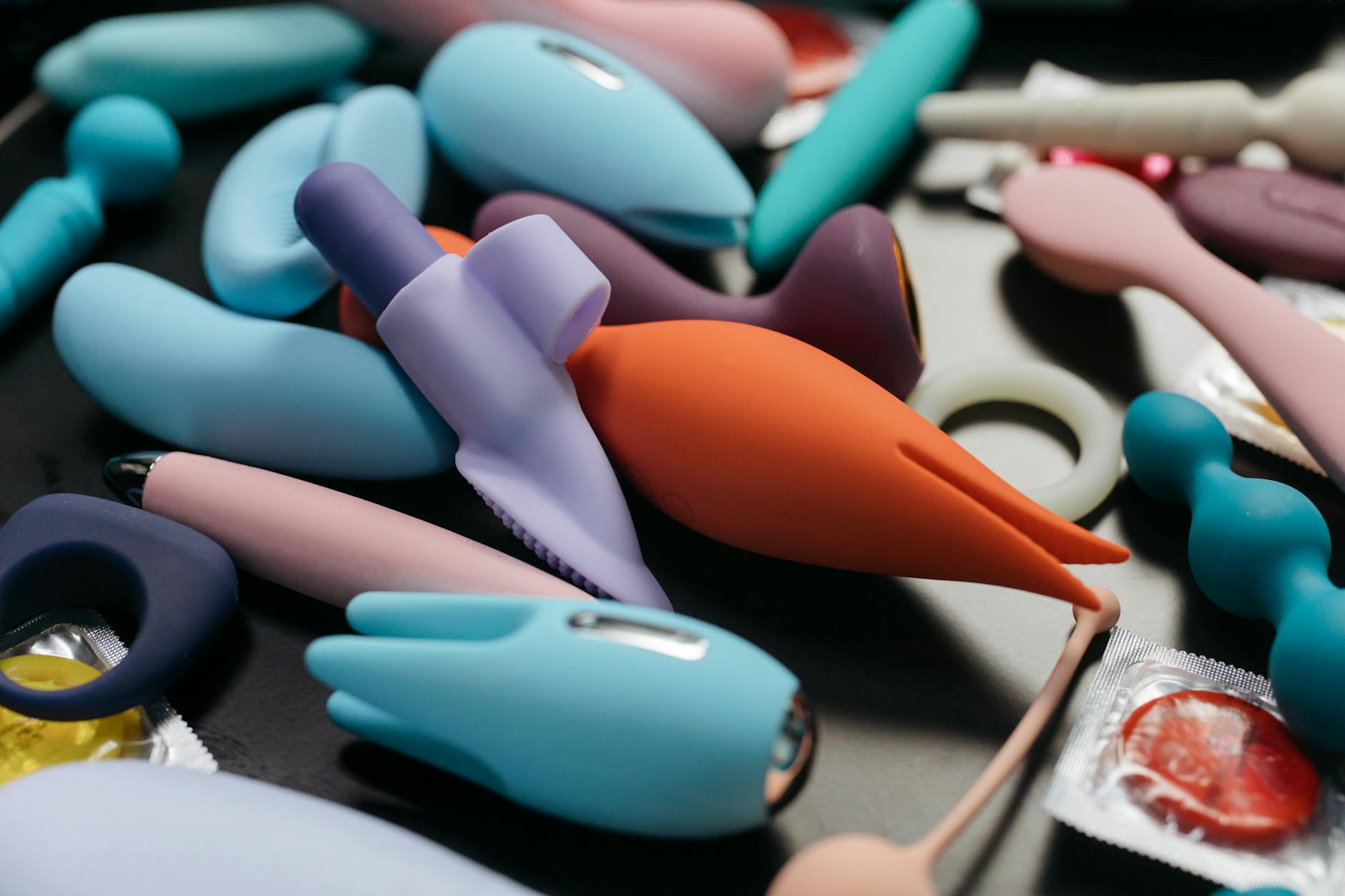
Photo by cottonbro studio on Pexels
Talking to a new partner about it (without the anxiety spiral)
For introverts, bringing up a vibrator can feel like a minefield. You worry you're saying "You're not enough." You worry they'll feel rejected. You worry the conversation itself will require so much energy that you won't have any left for actual intimacy.
Here's a script that works, because it frames the vibrator as something you need rather than something they're failing to provide: "I've noticed I get more into it when I have something I can focus on physically. I'd like to try using a vibrator sometimes, maybe with you. Not instead of you, but alongside. Would that work?"
The key is specificity. You're not asking if they're okay with it. You're proposing a concrete scenario. Most partners respond well to this because it doesn't feel like criticism. It feels like you're teaching them how to make sex better for both of you.
If your partner pushes back, that's information. You need someone who gets that your pleasure is non-negotiable, not something they should feel threatened by. As an introvert navigating new relationship energy, the last thing you need is a partner who makes you defend your own body.
Building solo pleasure into your routine
For introverts in new relationships, solo pleasure isn't selfish. It's maintenance. It's how you keep your arousal system online when social demands are high. It's how you stay connected to your own body when you're also managing someone else's needs and presence.
Using a lemon clitoral vibrator solo regularly does something specific: it keeps your nervous system calibrated to pleasure. When you're regularly experiencing satisfaction on your own terms, partnered sex stops feeling like an obligation. You want it, or you don't, based on actual desire rather than guilt or social expectation.
For introverts, this solo practice is also where you get to slow down. No performance. No timing concerns. No worrying if you're taking too long or being too quiet. You can explore what actually turns you on without an audience, without social demands, without the constant low-level anxiety that new relationships naturally create.
Schedule it the way you'd schedule anything important. Tuesday evening, Sunday morning, whenever you have mental space. Use it as part of your introvert recovery protocol. It's not cheating on your partner. It's honoring your own capacity.
When you're partnered and still need time alone
One of the hardest things for new relationships with introverts is that we sometimes need to step back right when connection should be happening. You're cuddling, things are getting intimate, and suddenly you're touching the edge of your social battery. Your body gets tight. Your mind goes quiet. And your partner feels rejected.
This is where a vibrator becomes practical and emotional scaffolding. If you're in bed together and you feel that exhaustion rising, you can suggest "What if I do this for a bit while we're together?" Suddenly you're still connected, but you're not performing. You're receiving. You're in control of the pace and intensity. Your partner gets to be present without carrying the responsibility of making it happen.
This small shift can change everything for introverts in new relationships. Sex stops feeling like a performance you're being evaluated on. It becomes something you're actually doing for yourself, with someone you care about nearby.
When it's time to go deeper
As a new relationship progresses past the first few months, introversion doesn't magically disappear. But your capacity shifts. You build patterns. You learn that your partner isn't judging you for needing space. You stop managing quite so hard.
That's when lemon vibrators shift from a communication tool to just part of your intimate landscape. You might use one more spontaneously. You might develop routines where it's a regular part of partnered sex. You might discover that what you thought was low desire was actually just exhaustion and social demand wearing you down.
If you're interested in exploring more specific dynamics as your relationship deepens, posts like how to use a lemon vibrator for better orgasms with a partner after a long absence offer frameworks for rekindling connection after the initial intensity settles. There's also value in understanding how to use a lemon vibrator when you have communication challenges with your partner, because introversion and communication patterns are deeply linked.
The introvert's permission slip
Here's what I want you to know: your pleasure is not a compromise you make for a relationship. It's not a performance metric. It's not something you owe anyone. As an introvert, you're managing a constant negotiation between your internal world and external demands. Your sexuality deserves the same respect you'd give any other part of yourself that needs protection and honoring.
A lemon vibrator is a tool. But for introverts in new relationships, it's also permission. Permission to define pleasure on your terms. Permission to communicate without having to be verbally generous every single time. Permission to say "This is what I need" through your body instead of through a conversation that depletes you.
Your introversion isn't a problem to solve. Your new relationship doesn't require you to become someone more extroverted or always-on. What it requires is a partner who gets it, and tools that help you bridge the gap between what you feel inside and what you're able to show.
People also ask
How do I tell my new partner I want to use a vibrator without them thinking I'm unsatisfied?
Frame it as exploration, not criticism. Try: "I've been thinking about what really gets me going, and I want to try using a vibrator with you. It helps me focus on sensation." This positions it as you teaching your partner something about your pleasure, not them failing to provide it. If they're secure, they'll get curious. If they get defensive, that's valuable information about whether this relationship respects your autonomy.
Can introversion actually affect how aroused I get?
Absolutely. Arousal isn't just physical. Your nervous system state matters enormously. When you're socially depleted, your parasympathetic nervous system (the part that handles arousal and relaxation) has less bandwidth. This doesn't mean you have low desire. It means your desire emerges differently than it does for extroverts. Solo masturbation with a lemon vibrator can help you recalibrate and recognize your actual arousal patterns, separate from social demand.
Is it weird to use a vibrator alone when I have a partner?
Not at all. Solo pleasure serves a completely different function than partnered sex. It's maintenance. It's how you stay connected to your body when life is demanding. Partners who understand this report less pressure, more genuine connection, and better sex overall because both people are coming from a place of real desire rather than obligation.
How do I ask to use a vibrator during sex without stopping the momentum?
Bring it up beforehand, not in the moment. "I'd like to try using a vibrator next time we're together" is very different from "Can we pause so I can grab this?" The conversation before takes thirty seconds and sets an expectation. In the moment, you can just reach for it. No stopping. No explaining. Just integration.
What if my partner is uncomfortable with vibrators?
That's a conversation worth having, but your pleasure is non-negotiable. A partner's discomfort with a tool that helps you feel good is ultimately their insecurity, not your problem. You can explore where it comes from ("Are you worried I prefer it to you?" often surfaces the real fear), but you shouldn't abandon your own pleasure to manage their feelings. If they won't move on this, that's important information about compatibility.
How often should I be using a lemon clitoral vibrator as an introvert with a new partner?
There's no "should." Listen to your body and your capacity. Some weeks you might use one solo three times and partnered once. Other weeks might be less frequent. The point is agency, not frequency. Use it when it serves you, not because you think you're supposed to. Your introversion means you likely need more solo time and pleasure than cultural narratives suggest, and that's exactly right for your neurology.
The bottom line
Introversion doesn't make you bad at relationships. It makes you thoughtful, often slower to trust, more intentional about intimacy. A lemon vibrator isn't a cheat code for extroversion. It's a tool that lets you be fully yourself while still showing up with a partner. Your pleasure, your pace, your communication style. That's not selfish. That's sustainable.
If you're ready to explore deeper about how to build intimacy that honors your actual needs, reach out. We can talk about what a relationship rhythm looks like when you're honoring introversion instead of fighting it.