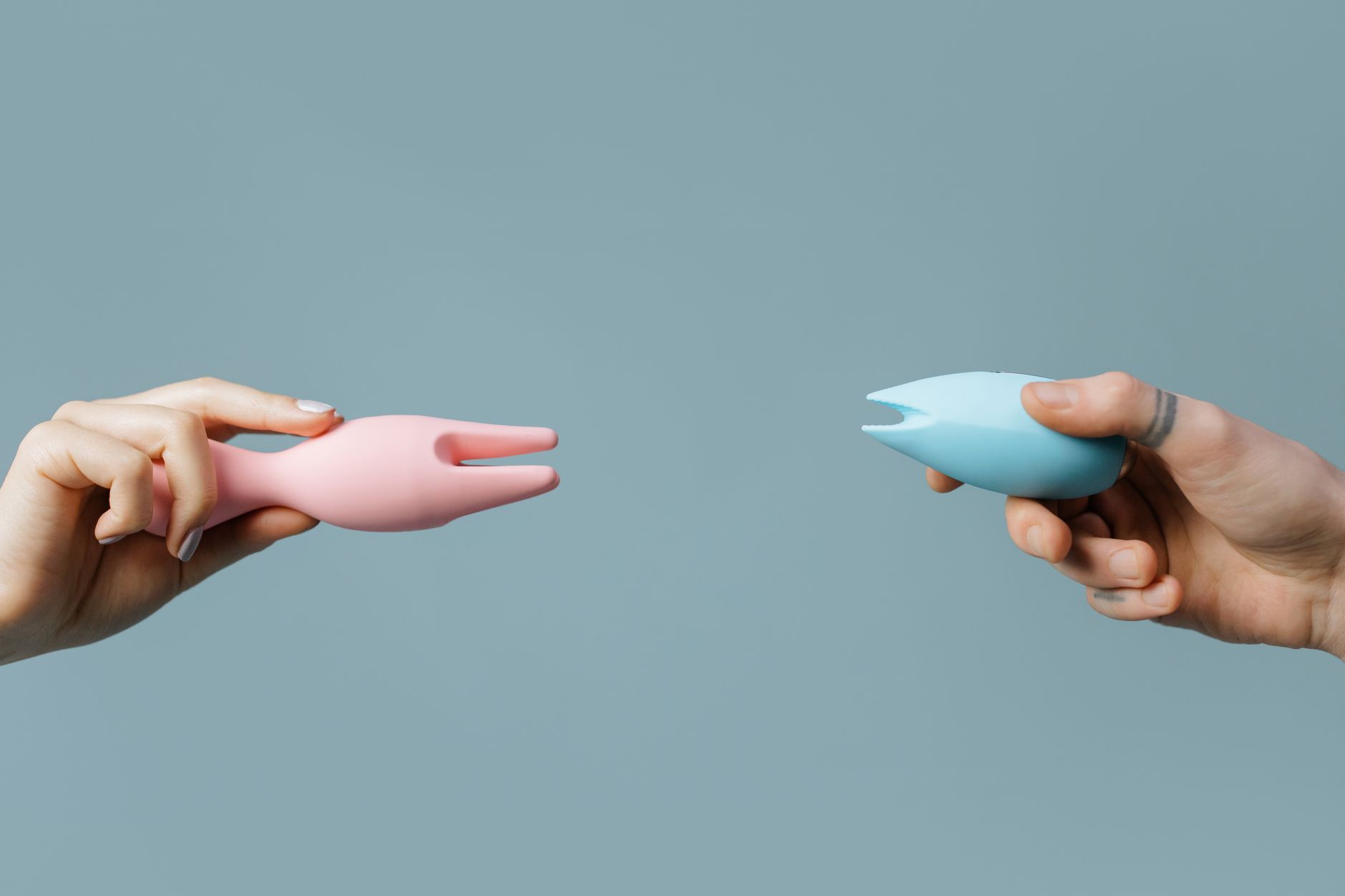
Here's what happens when orgasm timing doesn't sync. One partner climaxes in five minutes. The other needs fifteen. Suddenly sex becomes a negotiation instead of a pleasure. The faster partner waits, getting self-conscious. The slower partner performs anxiety instead of chasing sensation. Both of you end up frustrated, and nobody says it out loud.
This is one of the most common sexual mismatches I see in my practice, and it's also one of the most fixable. The problem isn't your bodies. It's the framework you're using.
A lemon clitoral vibrator changes that framework completely.
First, the physiology. People with vulvas typically need more direct clitoral stimulation to orgasm, and that stimulation often needs to be sustained at a particular rhythm and intensity. People with penises often climax faster from penetrative sensation alone. Neither timing is wrong. They're just different.
Second, the psychology. If you've spent years with a partner who comes quickly, you've probably learned to rush your own arousal or fake the ending. You've trained your nervous system to treat sex like a sprint. That habit doesn't disappear just because intellectually you know it's exhausting.
Third, the performance pressure. Once you notice the mismatch, you start timing yourself. Am I taking too long? Should I be done by now? This internal commentary kills arousal faster than anything else.
All three of these issues have a solution, and it starts with you learning your own orgasm pattern independent of your partner's timeline.
A lemon clitoral vibrator like the Lemon Clit Vibrator works because it gives you direct, consistent stimulation that you can control completely. You're not waiting for a partner's rhythm. You're not calibrating your pleasure to match someone else's arousal curve. You're learning what your own orgasm actually needs.
This matters for timing because it takes the guesswork out. When you know exactly how long your arousal takes, what intensity you need, and what pattern triggers release, you can communicate that clearly. Instead of "I don't know, I'm just slow," you can say "I need about twelve minutes at medium intensity." Suddenly it's data, not a problem.
The suction mechanism in lemon sexual toys is particularly useful here because it works differently than traditional vibration. Suction stimulates the clitoral complex without the pressure that can feel overwhelming or numb sensation over time. You can use it for longer stretches without fatigue or sensitivity loss.
Start here. Schedule solo time specifically to learn your own timeline. This isn't about rushing to orgasm. It's about understanding your arousal pattern: how long warm-up takes, what intensity you need, what rhythm gets you to the point of no return.
Use your lemon vibrator at a low setting first. Don't jump to high intensity. Notice how your body responds. Are you reaching arousal peak faster, or does your body need a longer ramp-up? Does your sensitivity stay consistent, or do you need intensity adjustments? What happens if you maintain the same pattern for five, ten, fifteen minutes?
This baseline data is gold. Most people have never actually timed their own arousal because the focus has always been on partnered sex. Solo practice gives you that information without performance anxiety.
Once you know your own timeline, tell your partner. Not during sex. Not when you're frustrated. Have this conversation when you're both calm and clothed. Say something like: "I've realized I need about fifteen minutes of direct clitoral stimulation to orgasm comfortably. I'm going to use a vibrator during sex so I'm not managing my own pleasure against your timeline."
Then explain what this actually means. It means you're not faking. It means you're more likely to actually come. It means you'll be more present instead of anxious about timing. Most partners get this immediately. The ones who don't are revealing something else about the relationship that needs attention.
There are several ways to integrate lemon clitoral vibrators into partnered sex depending on your situation.
If you have penetrative sex, you can use a lemon vibrator on your clitoris during penetration. This is actually the most reliable way to orgasm during partnered penetration because you're getting consistent clitoral stimulation while your partner does their thing. The pressure comes off both of you. Your partner isn't responsible for your orgasm. You're managing your own pleasure. This is how it should be.
If your partner comes quickly, using a lemon vibrator during or after their orgasm lets you continue without waiting or performing. You're not watching the clock. You're not faking. You're just continuing the experience for yourself.
If you need longer arousal, start with the vibrator before penetration begins. Spend ten minutes building arousal with your lemon clitoral vibrator while your partner stimulates you elsewhere. By the time penetration starts, you're already in a stronger arousal state. The timing gap narrows dramatically.
The key is that the vibrator isn't a signal that something's wrong. It's a tool that lets both of you relax into your actual physiology instead of fighting it.
Sometimes the timing issue isn't about actual arousal differences. It's about anxiety, distraction, or emotional disconnection. You can use a lemon vibrator here too, but the approach shifts.
If you're struggling to orgasm because of performance pressure, using a vibrator gives you permission to focus on sensation instead of outcome. The vibrator's consistency becomes a kind of permission structure. You can tell yourself: I'm just going to follow this sensation, not chase the finish line.
If distraction is the issue, the intense focal point of clitoral suction or vibration can actually help you stay present. Instead of your mind wandering while you're waiting, you have something concrete to concentrate on.
If emotional disconnection is the real problem (you don't feel close to your partner, or you're angry, or you're not attracted right now), a vibrator won't fix that. It's a tool for physical sensation, not emotional repair. In that case, the conversation needs to happen first.
Many people feel weird about using a vibrator during sex with a partner. You might think: I should be able to come from what my partner does. I'm cheating if I use a toy. I'm rejecting them.
Here's the truth. Most people with vulvas don't reliably orgasm from penetration alone. This isn't a reflection on you or your partner. It's anatomy. Using a lemon vibrator isn't cheating. It's solving a problem that both of you have.
Your partner probably wants you to orgasm more than they want to be the sole cause of your orgasm. If they don't, that's a different conversation about control and insecurity. But most partners are relieved when you take responsibility for your own pleasure because it takes the pressure off them too.
Think of it this way. If your partner wore glasses, you wouldn't see that as rejection. You'd understand that their eyes need correction for them to see clearly. A lemon clitoral vibrator is the same thing. Your nervous system needs specific stimulation to reach orgasm. That's not a flaw. That's your body asking for what works.
Once you normalize vibrators in your partnered sex life, the timing issue stops being a source of shame or resentment. You both relax. Sex becomes more about connection and less about performance metrics. You're not watching the clock. You're not faking. You're just present.
Many couples tell me that introducing a lemon vibrator actually improved their overall intimacy because it removed so much of the pressure and self-consciousness. You get to focus on sensation, connection, and pleasure instead of managing anxiety about whether you're taking too long.
Timing mismatches are normal. But they're only a problem if you treat them like a failure instead of a logistics question. A lemon vibrator is the logistics solution.
Most people get solid baseline data within two to four sessions of solo practice. You'll notice patterns pretty quickly. If you tend toward longer arousal, that usually shows up in the first solo session. By the fourth or fifth time, you'll have a pretty clear picture of what your body needs. Don't rush this phase. The data you gather now is what you'll use to communicate with your partner.
This is a relationship conversation, not a vibrator problem. If your partner feels threatened by a toy, that's worth exploring together or with a therapist. Often that fear is about feeling replaced or inadequate. When you reframe the vibrator as a tool for your pleasure (not a substitute for them), and when they see it actually helps you relax and enjoy sex more, the resistance softens. Start with the conversation before the toy. Frame it as a solution to a problem you both share.
You might need to adjust intensity or placement. Try starting at a lower setting, or position the vibrator so you get clitoral stimulation without blocking sensation elsewhere. You might also try using the vibrator for part of the encounter, not the whole thing. Some people use it during arousal, then set it aside once penetration starts. Experiment.
Not if you're using it as a tool in partnered sex. You're not replacing partner contact. You're adding to it. Solo practice with a vibrator might actually make it easier to orgasm with a partner because you've learned your own rhythm. The risk of dependence is mostly a myth unless you're exclusively using vibration at very high intensity every single time. Vary your practice.
Keep it simple and solution-focused. Say: "I've been thinking about the timing thing we deal with, and I want to try using a vibrator during sex. I think it would help me relax and actually enjoy it more." If they ask why, be honest: "My body just needs more direct stimulation to reach orgasm, and I'm tired of faking or feeling pressured." Most partners appreciate the honesty and the fact that you're taking responsibility for your own pleasure.
Absolutely. If your partner comes in a few minutes and you need fifteen, having your own vibrator means you can continue your own pleasure without waiting or performing. Your partner can stay present with you, touch you elsewhere, or just watch. The point is you're not dependent on their arousal to continue yours. Many couples find this actually reduces the pressure on the faster partner too. They're not racing against the clock to make sure you're done before they lose interest.
Orgasm timing mismatches aren't relationship failures. They're normal variations in how bodies work. But they only stay frustrating if you treat them as individual problems instead of shared logistics questions.
A lemon clitoral vibrator gives you the information and the independence you need to solve the timing gap. You learn your own arousal pattern. You communicate clearly with your partner. You use a tool that works for your body. Everyone relaxes. Sex becomes something you both enjoy instead of something you're performing.
If you're ready to try this approach, start with solo practice. Spend a few sessions with your vibrator learning your own timeline. Then have the conversation with your partner. Most couples find the shift happens faster than they expect once the pressure is off. If you want more guidance on talking with your partner about this, reach out to contact support and we can help.