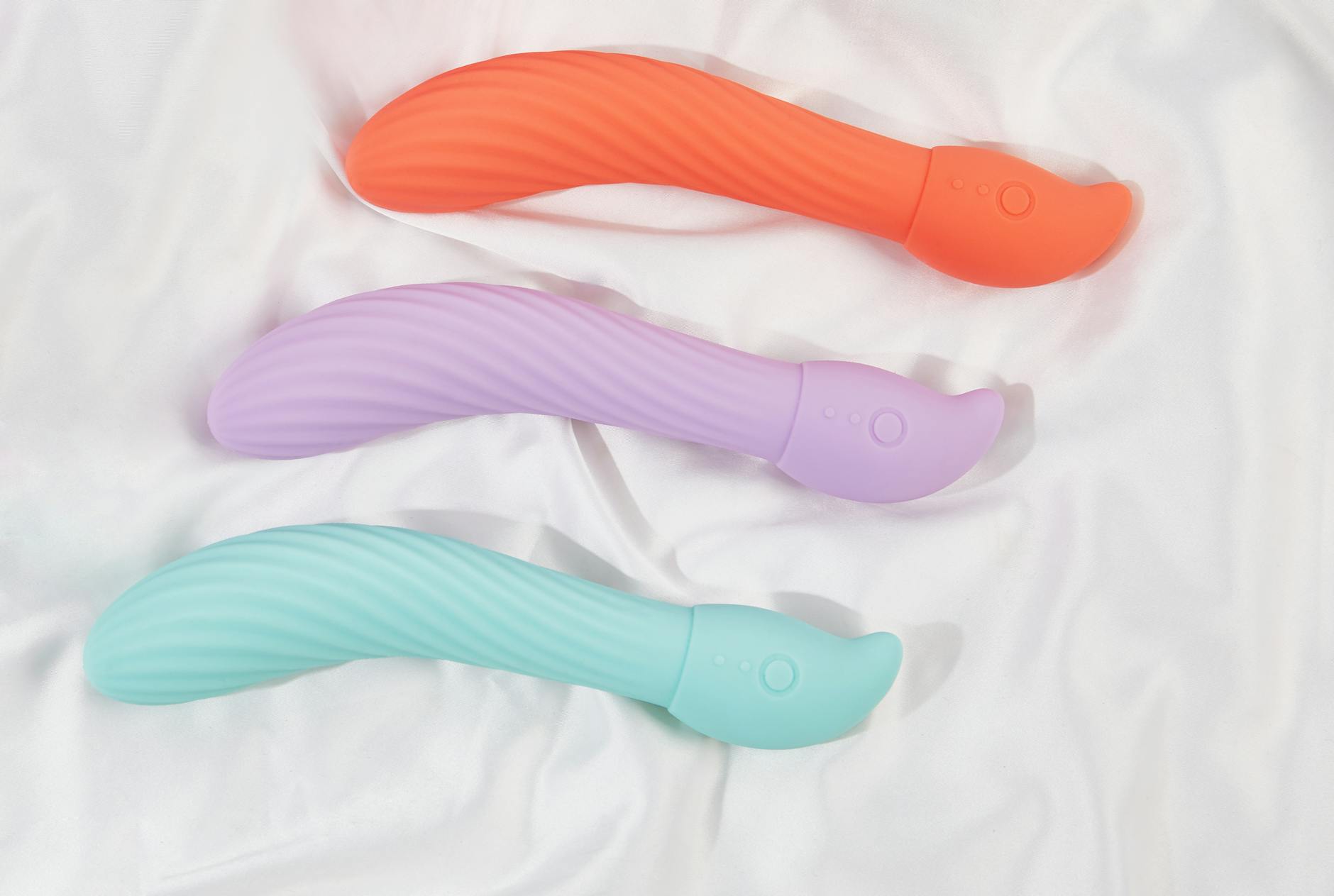
Does a Lemon Sucker Vibrator Work Better Than Bullet Vibrators?
Here's the thing about vibrator comparisons: most of what you read online is marketing dressed up as science. Someone's selling something, so of course their design is "revolutionary." But air-pulse lemon sucker vibrators genuinely do work differently than traditional bullets. Whether that difference matters to you is a separate question.
I'm going to walk you through what actually happens with each technology, the research behind it, and how to figure out which one fits your body and what you're looking for. No hype. Just the mechanics.
What a lemon sucker vibrator actually does
A lemon sucker vibrator, sometimes called an air-pulse vibrator, uses gentle suction and pulsing air waves instead of the back-and-forth or circular motion you get from a bullet. The Lem, for example, creates a seal around the clitoris and then pulses air rhythmically. This stimulates the thousands of nerve endings in the clitoral complex without direct friction.
Traditional bullets vibrate. They oscillate side-to-side or up-and-down at high frequency, creating stimulation through percussion and movement. The vibration travels through the toy into your tissue.
These aren't minor tweaks. They're fundamentally different technologies delivering stimulation in different ways. And your body responds differently to each one.
Why the mechanism matters for sensation
Your clitoris has about 8,000 nerve endings concentrated in the glans, the visible external part. The structure extends internally as well, in two branches called the clitoral crura that run under the vulva.
When a bullet vibrates directly on the glans, those nerves fire in rapid sequence. It's intense, it's fast, and for many people it gets the job done quickly. But here's where it gets interesting: that intensity can actually feel overwhelming or even painful for folks with high sensitivity. And for some people, the relentless vibration pattern can lead to numbness or desensitization over time.
Air-pulse stimulation works differently. The suction and pulsing create a gentler, more diffuse sensation that spreads across a larger area of the clitoral complex. It's less focused, less percussive, more enveloping. Many people describe it as feeling like a wave of pleasure rather than a direct hit.
The research: what we actually know
Limited but solid data supports this distinction. A 2009 study in The Journal of Sexual Medicine found that women using air-pulse devices reported higher satisfaction rates and easier orgasms compared to traditional vibrators. But here's the caveat: the sample size was small, and individual variation is massive.
What matters more than any single study is the mechanism. The suction-based design means less direct pressure on sensitive tissue. This is why air-pulse vibrators are often recommended for people with vulvodynia, clitoral hypersensitivity, or anyone who finds traditional vibrators too intense.
That said, intensity isn't a bad thing. Many people find bullets more satisfying precisely because of that direct, powerful stimulation. The "better" technology is whichever one aligns with your nervous system and what turns you on.
Why sensitive tissue responds differently
This is crucial and often overlooked. After menopause, during certain hormonal phases, or just as individual variation, clitoral tissue can be more sensitive to direct pressure. Friction-based stimulation (which is what a vibrating bullet creates) can feel raw or irritating.
Air-pulse devices distribute the sensation more evenly, which means less localized pressure. If you've ever felt discomfort or numbness after using a traditional vibrator, your tissue might be responding better to suction-based design.
But again: not everyone has sensitive tissue, and not everyone prefers this. Some people need that focused intensity to reach orgasm at all. That's equally valid.
The angle that changes things: pattern variety
Here's what doesn't get discussed enough. Many air-pulse lemon clitoral vibrators come with adjustable patterns and intensities. You can start gentle, build up gradually, and shift between sensations. Traditional bullets often have fewer variations.
This flexibility matters. It means you can start at a place that feels good and explore from there, rather than jumping straight into high-intensity vibration. For people rebuilding sensation after numbness, or exploring for the first time, or dealing with pain during sex, this adaptability is game-changing.
It's not that the suction is magic. It's that the design allows for more nuance.
Partner dynamics: another angle nobody mentions
If you're using toys with a partner, the design of your vibrator affects the experience for both of you. A bullet vibrator creates vibration that travels through bodies if you're in contact with your partner. Some couples find this couples-friendly; others find it distracting.
Air-pulse devices, because the stimulation is contained within the seal, tend to be quieter and create less vibration bleed. This changes the dynamic during partnered sex. You're not choosing between pleasure and connection; you're not managing the buzz.
Again, not better or worse. Different.
Cost and accessibility
Let's be practical. Quality air-pulse lemon sucker vibrators cost more than average bullets. A solid air-pulse device runs $60–$120. A decent bullet runs $25–$60. If budget is your main constraint, a well-designed bullet at a lower price point might actually serve you better than an air-pulse toy you're hesitant to buy.
Quality matters more than technology. A cheap air-pulse vibrator is worse than a well-made bullet. Don't let the design principle overshadow the actual product.
How to know which one to try
Start by being honest about your sensitivity. Do traditional vibrators feel too intense, too numb-inducing, or uncomfortable? If yes, air-pulse is worth exploring.
Do you orgasm easily with direct vibration? If yes, you might not need to switch. A lemon clitoral vibrator might feel gentle by comparison, which could be a feature or a drawback depending on what you're in the mood for.
Consider your environment too. Air-pulse devices are generally quieter. Bullets can be loud. If discretion matters, that's a practical factor.
Most importantly: not every body prefers the same thing, and not every body prefers the same thing every time. The best approach is curiosity, not conversion. If you've only tried bullets, air-pulse might open up new sensations. If you've only tried suction, bullets might offer a different kind of satisfaction.
The honest summary
A lemon sucker vibrator isn't objectively better than a bullet. But it's different in ways that matter if your body responds better to gentler, more diffuse stimulation. If you have sensitive tissue, find traditional vibrators painful or numbing, or want more control over intensity and pattern, air-pulse technology genuinely is the smarter choice.
If you orgasm easily and consistently with bullets, and you like that direct intensity, you don't need to change anything. Both technologies work. The question is which one works for you.
The best part? You don't have to choose one forever. Your body changes. Your preferences evolve. Trying both is how you learn what actually feels good, not what you're supposed to prefer.
FAQ
How does an air-pulse lemon vibrator compare to a traditional vibrator for beginners?
For first-timers, the gentler nature of air-pulse design is often a strength. You can start at lower intensities without worrying about overstimulation. Many beginners find that pattern variety helps them explore their body at their own pace. That said, if you're someone who needs direct intensity to feel anything, a bullet might be more effective. Start with what sounds intuitively appealing, and don't overthink it.
Can you use a lemon clitoral vibrator during partnered sex?
Absolutely. The contained stimulation means you're not vibrating your partner as a side effect. Many couples find air-pulse devices work better during sex because the sensation stays localized. Some prefer the experience of both partners feeling the vibration. Experiment and see what enhances connection for you both.
Why does a lemon sucker feel different than a bullet vibrator?
The mechanism is fundamentally different. A bullet creates high-frequency vibration through percussion. An air-pulse device creates rhythmic suction and pulsing. This stimulates the clitoris in different ways. One spreads sensation across a wider area; the other concentrates it. Different nerves fire, different pleasure pathways activate, different sensations result.
Is an air-pulse vibrator better for sensitive clitoris tissue?
Often, yes. If your tissue responds poorly to direct friction or vibration pressure, air-pulse design reduces that localized stress. The gentler stimulation spreads more evenly. That said, sensitivity is individual. Some people with sensitive tissue still prefer the focused intensity of a bullet. Test what actually works for your body, not what you think should work.
Do lemon sexual toys work for everyone?
No vibrator or sexual toy works the same way for every body. Lemon air-pulse devices work brilliantly for some people and feel underwhelming to others. The best toy is the one that aligns with your sensations, your sensitivity level, and what you're trying to experience. If you're curious, try it. If it doesn't click, try something else.
How long does an air-pulse lemon vibrator take to deliver results?
The time to orgasm varies based on your body, your arousal level, and what you're into. Air-pulse devices with multiple patterns give you flexibility to adjust as you go. Some people reach orgasm faster with the gentler sensation; others need the focused intensity of a bullet. There's no standard timeline. Pay attention to what your body tells you.
If you're still figuring out what works for you, that's the whole point. Pleasure isn't about finding the "best" tool. It's about understanding your own body well enough to choose what actually feels good. The best sexual toy is the one you reach for because it delivers, not because marketing convinced you it should.
Ready to explore? Check out our guide on how to use a lemon clitoral vibrator for beginners to start experimenting without pressure. Or dig deeper into why lemon vibrators work better for sensitive clitoral tissue if sensitivity is your main concern.
Questions about which device might fit your specific situation? Reach out at /contact and let's talk through it.